Apple-Obsessed Author Fella

Category: The Ramble (page 264 of 478)

Yammerings and Babblings

Digging Ditches Or Casting Spells: On Magic In Writing

Here is a modified version of the keynote speech I gave to the very wonderful Surrey International Writer’s Conference this past weekend, should you care to check it out. It’s been slightly rejiggered and reformatted to fit a proper blog post rather than a banquet speech.

* * *

There’s a war going on.

No, no — it’s not the war between self-publishers and the traditionally-published. Not a war between lit fic and genre nerds, not a clash betwixt authors and reviewers and the authors who, ahem, stalk the reviewers. This isn’t a war between you and me because frankly there’s way too many of you and I’m pretty sure I wouldn’t last fifteen seconds.

This isn’t even a war outside this blog.

It’s a war inside here.

*taps chest*

Inside the rusty bucket of fireplace ash I call a ‘heart.’

And even then you’re saying, “Oh, I know what he’s about to say. He’s about to talk about the war between cake and pie,” but there I say, nay, nay, that is not what I mean. (Besides, that is a Cold War, long locked in a permanent state of stalemate. Just as you think pie has clenched it, cake rises from the darkness of defeat, sporting frosting that tastes like buttercream and vengeance.)

The war I’m talking about is a hot war. Active and alive, fought even now as I write this blog post.

This war is about magic.

This war is about whether or not this thing that we do is somehow magical.

(And by “this thing we do,” I do not mean publishing. Oh hell no. Publishing is purely the making of sausage. Publishing is a gray and lightless place. Publishing is Mordor. Publishing is the inside of Gollum’s mouth: sticky and fishy and bitey.)

No, what I mean is: we sometimes think of writing as being a precious thing. A magical talent, an otherworldly commodity. When talking about writing we sometimes speak of things in a magical way, right? THE MUSE COUGHED INTO MY MOUTH AND FILLED ME WITH HER PRECIOUS BACTERIAL WHIMSY. Or, MY CHARACTERS DIDNT LISTEN TO ME, NO SIR, THEY JUST WENT OFF AND DID THEIR OWN THING, LIKE A GANG OF ROGUE CHIMPANZEES LET LOOSE IN A SHOPPING MALL HA HA HA SILLY SENTIENT CHARACTERS I’M JUST A PAWN IN THEIR GAME.

Trust me — I get it. I even want to agree. Our writing certainly feels magical, right? It has the sense of the ritual about it — the occult, the arcane. Conjuring something from literally nothing. The act driven by little reagents: the right pen, the proper font, the perfect coffee mug. The act further driven by sacrifices big and small: things laid on the altar of the act like our time, our tears, our sanity. (I mean, because c’mon: writers are cuckoo bananapants. I would posit that as writers we are each crazier than an outhouse owl. Which is of course an owl trapped in an outhouse. I think we can all agree that is an owl we do not want to meet because that owl wants to fly but all it can do instead is huff outhouse fumes in a dark crap-closet poop-prison.)

With writing, we all feel like little Harries and Hermiones running around:

“SCRIPTO NOVELIOSO!”

*shoots words out of magic wand*

Ah, but see — I was not raised with magic in mind.

My father was not a man given over such foolish notions. He was a man of fundamental things: dirt, wood, hay, the bang of a hammer, the growl of an engine. I remember at a young age asking him about God and he shrugged and grunted: “God lives in the Earth and makes the plants grow.” I was like, whoa, really? Is that true? Here I was picturing an actual deity lurking beneath the unturned earth, ready to shove corn stalks and blackberry briar up through the ground. And he gave me this look like I’d been donkey-kicked and was like, “Jesus Christ, how should I know? Now hand me that wrench.”

My father’s answer to things was not ‘magic.’ It was HARD MOTHERFUCKING WORK. God forbid you tell him you were bored. “Go build something. Mow the lawn. Move that box.” He would utter that dreadful curse: “Bored? Oh, I’ll give you something to do.” He literally — and this is a true story — told me one time to dig a ten foot long ditch, three feet deep, in the yard. I did it. Are we laying pipe? Hiding a snake? Burying various body parts? Then he covered it back up again. I was like, what the crap are you doing? Why did I dig that hole?

He said: “Sometimes you just need to dig a ditch.”

When the day came that I made it clear I wanted to be a writer, I’m pretty sure his ass clenched up hard enough to snap a piece of metal rebar. Writing was a soft job. A writer’s hands were soft hands. My father’s hands were no longer hands: they were just bones wreathed in callus. (Actually, a note about my father’s hands: he was missing his pinky finger, because he smashed it in a log splitter, and instead of paying the doctor to cut it off, he did it himself with a pair of bolt cutters to save some coin and, apparently, aggravation. By the way,there’s no writing advice analog there, no storytelling metaphor buried in that — seriously, do not cut off your own finger with bolt cutters. That’s a PSA from me to you. You can thank me later.)

So, I took his grumpy ethos of GRRRR HARD WORK with me to into the word mines and I told him, you’ll see, I’ll work hard, I’ll make it big someday. (And I think he was like, YEAH YEAH, LEMME KNOW WHEN YOUR LITTLE HOBBY MAKES YOU CUT OFF YOUR OWN PINKY FINGER.) And then that was that for how he felt about my career choice.

So, a big part of me is very much anti-magic when it comes to this thing we do. Anyone presents a romantic, misty-eyed narrative about writing and my knee-jerk response is, SHUT UP. WRITING IS JUST DIGGING DITCHES. ITS YOU CLEANING OUT THE CREATIVE HORSE STALLS. ITS ALL HORSE POOP AND HEAVY SHOVELS. SHOVEL IT! HORSE POOP!

*thrusts shovel full of horse poop at you*

It’s easy to see how magical thinking can hurt you, as a writer. By giving over your writing to the fates, the gods, the muses, and in that, you remove your own agency. You cede control of the work — of the creation of the work — to forces beyond you, absolving you of all responsibility. I had a neighbor who talked about wanting to be a writer, and she said that she’d do it but she just had to “find the time,” but that when she did she would do it because she was inspired — she’d be hit by a “bolt of lightning” and even if she were driving her grandchildren around she’d have to pull over on the side of the road and just write it all down. Which of course sounds lovely. Inspiration! Bolts of lightning! So dramatic! Also sounds like a really great way to never write a goddamn thing.

With magical thinking, if the ritual isn’t perfect, if the proper sacrifices were not made, if the magical elves who live under your desk are not appeased — then the work never gets done. I can assure you right now: every day of writing does not feel like magic.

(Some days feel like an act of violent proctology on an angry goat.)

And don’t even get me started on editing. If magic was an essential to edit your book, I’m not sure a second draft would ever ever EVER get written. Editing can be a bewildering slog. It can be a dizzying run through a hedge maze at night. The only magic felt there sometimes is a nightmare magic — imps and incubi hounding your every step.

Leaving writing as a magical act further suggests that those that can conjure the creative power are somehow more special: given over to a sacred gift, born of a proper bloodline or under an alignment of authorial planets. Writing too hard? Hm, must not have that old wordslinger magic! You’re not a proper ordained priest in the Inkolyte Brotherhood. Oh, what, you think anybody can just write? What are you, some kind of Lutheran? Get your weird manifesto off my door, anarchist.

But even still, even in those comparisons…

Little hints of magic. Sparks in the dark.

And so then the battle flares up again: I like magic. Magic is neat. I want this thing we do to be magical because it explains so much — it explains the serendipity of a good day’s work, it explains when your characters seem to have minds of their own, and it explains what happens when you get a really great book that grabs you by the sticky wicket and won’t let go. Imagination and creation are so volcanic, so pyroclastic, how can that not be magic? Stories shape the world. Writers have power. What I’m trying to say is:

GODamnit, I want to be Gandalf.

Why can’t I be Gandalf?

WHY ARE YOU TRYING TO TAKE THIS AWAY FROM ME.

One day, I too shall have a Gandalfian beard.

*slams down giant pen against the earth*

THOU SHALL NOT PROCRASTINATE

*wrestles the fire demon of authorial distractions into a chasm*

Ahem.

Still, though, much as I want to be Gandalf — Gandalf was special. An elevated class. A proper wizard. I’m no wizard. I’m just a regular old human tub-of-guts. It feels like magic, but it can’t be magic — can it? Maybe there’s something there, I think. I wonder, then, is it less about casting a magic spell or giving yourself over to mystical forces, and is it more a magic trick? Is it artifice and illusion? Less Gandalf and more Penn and Teller? What we see as the audience at a magic show seems impossible: the rabbit in the hat, the girl in the box. But the magician isn’t given over to that magic. The magician knows the trick. The magician created the mechanism by which to fool US into thinking that what we are seeing is real.

So, which is it? Spellcasting magic? Just a trick? Purely the product of hard work?

Let me tell you about three times where this thing that we do felt magical truly for me.

One: me, the year 2010. I spent five years trying and failing to write what would become my debut novel, BLACKBIRDS. I have a screenwriting mentor at the time — because that’s what you do, right? You want to be a novelist, go get a screenwriting mentor? — and he sits me down and tells me to outline the book that I am unable to finish. And I say HO HO HO no silly Hollywoodman, we AUTHORIAL TYPES find our sails filled with MUSE BREATH, not with the crass and gassy winds of your pedestrian outlines. And he says, no, shut up, do it anyway, and so I gnash my teeth. Grr. And bite the belt. And punch frozen meat. And then I do it. it. Holy shit, I do it! Suddenly, I have a plot. I have an ending! And a month later, I have a novel.

Two: another writer’s conference. Not long after Blackbirds has come out. I’m coming out of a banquet a young woman hurries up to me and she’s shaking and quaking and I’m suddenly worried about her. Is something wrong, I ask? Seems she’s nervous about meeting me. And I think, oh, god, what has she heard? What did I do? Is she about to serve me a subpoena? She’s totally about to serve me a subpoena. But then she says she’s a fan, she loved my novel BLACKBIRDS and it made her want to be a writer and I think, oh my stars and garters, I think this is my first bonafide fan! (And then I think: I should probably tell her to learn restaurant management or lockpicking skills or anything but writing.)

Three: this memory, a few years before the other two. My father is still alive, before the prostate cancer would come to claim him. I’m in Colorado visiting his new house, for he had just moved out there to retire, and as with the war between cake and pie I feel like my father and I have forced a stalemate. He doesn’t approve of my career choice but he grudgingly acknowledges it and I acknowledge his grudging acknowledgment and life moves on. Then comes a day on this trip where he introduces me to a close friend and neighbor, a man named George. And George proceeds to dictate my career to me thus far: all my successes, all of my projects, none of my failures. And I ask him, how do you know all this? Are you stalking me online, George? Though I am always flattered by the attention of older gentlemen — *bats eyelashes* — you don’t seem the type. He seems surprised and says, “Well, your father told me all about it, of course. He’s really proud of all the things you’ve worked to achieve.”

*jaw does not hang open so much as it unhinges and falls to the dirt*

Well, holy shit.

There. Magic. Punctuating the darkness like little fireflies.

Three times that are not exhaustive. Just three snapshots among many.

What all this tells me is that:

The act of writing is not magic.

But it sure has its magic moments.

And why does it have those moments?

It has them because of us.

See, the truth is, no war is going on. These different ideas — magic as spellcasting, magic as trick, writing as a product of hard work — come together to tell the whole story. It’s hard work that allows us to tirelessly practice and reiterate our tricks. It’s hard work and indeed sacrifice that allows us to sometimes conjure those moments that remind us that writing starts as fingers on keyboards and words on pages but can end up as something so much stranger and so much greater than we ever anticipated. We are the magicians and wizards, but it takes a helluva lot of hard work — not from the outside, but from the inside, magic drawn up from within like water from a well more than it is hoped for like a bolt of lightning — to clinch the spell, to perform the illusion.

Scariest Video Game: Go!

We asked about books, and then movies.

Now it’s time to talk video games.

Scary, distuuuuuurbing video games.

(insert something something gamergate)

(respond with something something fuck gamergate)

You’ve played video games. Which ones startled you? Freaked you got? Climbed up on your back like a demon monkey and chattered its infernally primitive heresies into your ear as you played?

Drop into the comments, let ’em fly.

Flash Fiction Challenge: Diseased Horror

Last week: horror as spam.

This week:

The country’s in EBOLA PANIC, going so far as to elect an Ebola Czar. (Did you know that vending machines kill 13 people a year? I look forward to our new Vending Machine Czar to address this grave concern.) Disease of course freaks people out. And next Friday? Halloween. The time of horror!

Which means it’s time for you to freak people out with disease.

Write 1000 words of flash fiction.

It should be horror.

It should feature disease as an axis of that horror.

That’s it. That’s the mission.

Write it at your blog or online space.

Link back here.

Due by Halloween, noon, EST.

To Canada, I Go

Updates will be a little thin on the ground here until next week or so — because I’m leaving on a jetplane to go to the OTHER end of Canada (I was in Toronto around May). I’ll be in Vancouver for the Surrey International Writers’ Conference, with the likes of Mary Robinette Kowal, Diana Gabaldon, Pam van Hylckama, Sarah Wendell, Donald Maass, and Cory Doctorow.

I’ll be giving a keynote, and also giving workshops on THEME and CHARACTER.

Because theme and character are awesome, that’s why.

Oh, and a panel on THE SOCIAL MEDIAS. In which I will refuse to acknowledge that any social media exists that is not Ello. I will also fire Ello Invites from a cannon.

If you’re attending, say hi! I may have stickers. STICKERS, I TELL YOU.

Because what 12-year-old doesn’t love stickers. (And, at heart, I’m basically 12.)

If you’re in the area but not attending, do note that there is a “free to the public!” author signing on Saturday night, which I will be attending.

*waves*

*takes off in ornithopter*

*wait I said jetplane*

*lands ornithopter on top of jetplane*

*gets arrested for ornithopter terrorism*

nooooo

Goodbye, Tai (2003 – 2014)

Tai was our little taco terrier.

A taco terrier is — well, yes, a terrier that will eat tacos, but also a dog that is part chihuahua and part terrier. In this case, part toy fox terrier, or so we were told. (Sometimes they’re called chitoxies, but as that does not contain the word “taco,” it is plainly inferior.)

My wife and I bought Tai when she was a pot-bellied little pup. We bought her from a pet store at a time we were naive enough to think that most pet stores didn’t source their animals from puppy farms. We bought her from a time when my wife wasn’t even my wife — when in fact we did not even live with one another and shared her briefly between houses.

We were young and dumb. Puppies ourselves. Everybody told us not to buy her. Why would we? My wife and I hadn’t been together all that long but we knew this dog was our dog from the moment we picked her up and she climbed all over us, not demanding pink belly rubs so much as forcibly rubbing her belly wherever she could. Snortling and snorfling. So we took her home and hurried out and bought all the canine accoutrements and everyone rolled their eyes at us wondering how long any of it would last. But our doggy did last, and I eventually married my wife, and our taco terrier was a part of our family from the moment we laid eyes on her.

Tai was pugnacious, but sweet.

She owned any big dog she came in contact with. She would bite them on the lip. And this small but powerful action would allow her to rule even the largest dogs.

(She did not trust little dogs.)

She was reluctant best buddies with our last dog, Yaga. They were like a mismatched cop team. He was blissfully ignorant as she groused at him. But her disdain of the big lunkhead was a lie — they ate together and she waited for him outside so they could pee together and they were pals.

When he died, I think she was a little bit heartbroken. This, the chihuahua curse, and a part of her that overruled her terrier components: a chihuahua often only bonds with a few others. A couple-few humans, maybe one other dog, and that was it. Yaga died and Tai never seemed quite right after. She lost a step. Our son being born and our new dog, Loa, failed to lend her any energy — and while she tolerated Loa and accepted petting and cuddling from our boy, she never really connected with either of them.

Still, she was curious and funny and weird.

She snored so loud that if you were upstairs, you could feel it in the floorboards coming from downstairs. Like a dragon sleeping on its hoard of gold.

She barked in her sleep. Little yips.

(Plus, she could basically sleep anywhere.)

She liked to lay with her back against you and her belly out toward the world.

For rubbings, of course. The sweet canine currency of belly rubbings.

She was stubborn as anything. Nearly impossible to move. For a small dog, she was basically a mountain attached to a leash — you went where she went, and not the reverse.

She was totally nosy. A major busy-body, this one. Give her a window and a perch and she will watch every neighborhood argument, every cat, every squirrel, every crankhead and mailman.

For such a small dog — and for such a stumpy loaf of bread — she loved the snow and navigated it like a dolphin. A furry, bitey dolphin.

(Though sometimes she looked more like a baby seal than a dolphin, truth be told.)

At our new house, she liked to climb up on the mound in our backyard and bark at distant, unseen neighbors. Or chime in at the goings-on of rustling deer. (Nosy even with woodland creatures.)

She was a diligent explorer.

She could make tons of funny faces.

I like to think she was a happy dog, cantankerous and cranky as she could be.

Thing is, she was also sick a lot of her life. Not dramatically so, but she was prone to allergies — early on she was basically tearing herself apart, stripping off her fur and biting herself raw, and when the vet called after many tests to read us the list of allergens, it was a five minute voicemail. I didn’t know that many kinds of grasses even existed. So, we put her on a wonder drug called Atopica, but the not-so-wonderous part of that drug was that it reduced her immune response which left her prone to opportunistic infections (usually in her ears).

Still, it allowed us to sometimes dress her in a hilarious clown collar:

Recently, though, she’d begun to suffer the effects of what seemed to be IBD/Colitis — a severe thickening of the small intestine made it very hard for her to absorb food or even get hydrated, and so she started drinking a lot and having accidents. The vet confirmed the diagnosis but suggested there could be more at play — there, that specter of cancer (and speak the refrain with me: fuck cancer) and all the while, she was wasting away and we were losing control of the situation. We tried everything. Our house became a pet biocontainment unit. We tried food, meds, ran tests, spent lots of money (her health problems throughout her life probably caused us to spend the rough equivalent of a cheaper new car — worth it, which is why we spent it).

We were at our wit’s end.

It was only recently that I’d found folks online that had luck with Atopica controlling their pets’ IBD, and so I dug out our old meds (thankfully not expired) and tried those.

We had her scheduled to be put down last week.

But literally at the last minute, she finally started to show improvement.

And we had about four or five days of steady, meaningful improvement.

The last couple days, though, she started to go back downhill again. Her face began to twitch — we suspected a calcium deficiency but the vet said it was suggestive of seizures that themselves suggested brain involvement of what may be cancer. (IBD can be caused by cancer or can be the cause of it.) The Atopica had worked, but only temporarily, it seemed. We were losing her.

We didn’t know why.

But there comes a point when it seems cruel to let them continue. A mercy humans aren’t really allowed, but one that we can reserve for our beloved animals — the ability to take them away from the pain before it overwhelms them. It’s hard to know when to do this, and even now I’m bawling my eyes out thinking, but we could’ve tried one more thing. But so it goes. She was reduced in body. She didn’t enjoy the things she once enjoyed. She didn’t eat much food. She drank so much water you’d think she was addicted to it (and yet, paradoxically, was so dehydrated we had to give her fluids through a bag-and-needle). Couldn’t get up the steps easily, as her muscle tone was wasting away. It’s true that we still saw the spark of the old dog in there a few times a day — the way her ears perked up, the way she went sniffing for food while I was cooking, the faint crankypants growl in the back of her throat at invaders real or imagined.

I’m thankful for the days of improvement we did get. She showed more of that spark. She got to play with my sister’s dog a little. Got to eat more food. Get more love. I’m glad we had her around for a few more days. A few more genuinely good days.

Still.

Those days are gone. As they are for all of us, eventually. (And here, not an urging toward the edge of the pit of grief but rather toward the realization that we all head toward the doggy dirtnap one day, and so we should make the best of the time we — and our loved ones — are given.)

Tai, I think, was letting us know.

It was time.

So, we had a new appointment.

The vet came today.

And we had to say goodbye to our little taco terrier here at home.

(Our son said goodbye to our dog, and then went off to stay with his Mom-Mom while the vet came. It was very hard to explain to a three-year-old what was happening, and for a half-hour he was basically shutting down, not acknowledging that she wasn’t going to be here anymore, and was not acting as nice as we’d like — though at that point I found it really important to realize that as much as we dream of his perfect reaction to this whole thing, I’M barely keeping shit together so it’s not very princely of me to expect the toddler to be strong and compassionate.

But just before he left, we told him outright what was happening — no mincing words. I said, “Do you know how my Daddy is dead?” and he said he did. And I said that’s what’s happening to Tai. And then he asked us to turn around so he could say goodbye to her, and he told her he loved her. Honesty, at least with our kid, seems best — even when it’s hard to hear.)

We took her outside to the front lawn. On her bed. The day was bright. The air was warm. The sun poked through the clouds and the sky was blue. Leaves of many colors fell around us. Tai stretched out and relaxed in a way we hadn’t seen her relax in a very long time. We petted her and talked to her. Told her we loved her. She went to sleep. And then she went beyond it.

Goodbye to our little Tai.

I’m sorry we couldn’t do more for you.

We miss you.

Five Ways To Respond To A Negative Review: A Helpful Guide!

1. Do Nothing

Bad reviews happen.

They happen the way snow and rain happens. The way high tide rolls in, or the way mosquitos and herpes and gout and a thousand NCIS iterations exist (my favorite is NCIS: Schenectady, starring Alan Thicke and Johnny-Five from Short Circuit.) That’s not to say a bad review is equivalent in its moral and creative compass as a venereal disease — but that’s not your call to make. For your mileage, bad reviews are a fact of life, and not one that should crawl up under your skin like a botfly worm. (If you don’t know what that is, oh, shit, do not Google it.)

Listen, your favorite author? Your favorite book?

Go look.

That book, that author, will have bad reviews.

At least one of them will look like it was written by a Neanderthal with a head injury.

Did Stephen King slap on astronaut diapers and hunt down his cultural critics? No. Well, I mean, I don’t think so? If he did, he did it quietly, I guess.

So: just relax.

One bad review is them, not you.

(Admittedly, a ton of bad reviews is probably you, not them, but that’s a different conversation.)

Do nothing! Relax. Go write. Write better today than you did yesterday, and write better tomorrow than you did today. Spite them by forever upping your game.

See? So easy.

Are we done?

2. Hey, No, Seriously, Do Nothing

Wait, why are we still here?

What the hell did I just say?

Do. Nothing.

Put down the pen. Why do you have a pen? Were you going to begin an angry letter-writing campaign? A letter of great venom and wit? Who are you, Oscar Wilde?

Okay, I get it, some reviewers — they write reviews that get all up in your marrow. Some blogger slagged your work and it sounds like — okay, it sounds to you like they didn’t “get it.” Or they’re making accusations that you feel are specious at best. They’re getting details wrong. Maybe they’ve suggested that you or your work is racist or sexist or some other kind of -ist. They’re turning people off of your work, you scream and froth and flail about.

That’s their right.

And yes, of course, it’s your right to respond.

But, let’s play this out a little bit.

What exactly do you think is going to happen when you respond? Hm? Do you think they’re going to be enlightened to your ‘corrections?’ That you’re going to engage in a dialogue so productive that not only will the two of you be best friends, but said reviewer will recant his wretched review and apologize publicly and next thing you know: BOOM INSTANT BESTSELLER?

Sure, that might happen.

I also might develop a rare medical condition where I shit buckets of gold Krugerrands.

Here’s what’s probably going to happen.

a) You’re going to draw attention to a review you already don’t want people to see.

b) You’re going to piss off the reviewer, who wrote the review fair and square, and where before they might’ve been willing to chalk up your one book as a single instance, now they’re left to wonder if this is part of a pattern with you, you intrusive jerk.

c) If the reviewer isn’t really fair and square and is instead someone who has the scent of the troll about him, well, you just shoveled food into that troll’s mouth. You fed the beast and now the beast wants more. You probably just became a target.

d) The reviewer’s audience, if one exists, is now like: THAT AUTHOR IS TOTAL JERKPANTS.

You gotta understand: that reviewer is allowed to hold whatever opinion that reviewer wants. It doesn’t make her right. It doesn’t make her wrong. It doesn’t give her authority, and it also doesn’t rob her of it. And here you’re saying, buh-buh-but if she has the right to slag my book then I have the right to slag her slagging of my book.

And yes, yes you jolly well fucking do have that right.

And yet, it would not be wise to execute that right. Can and should are not equal.

There exists a vital cultural exchange between creator and critic. The critic’s job is to exist outside the material — it is the critic’s job to break the work apart and see what the pieces say. It is a kind of divination: guts out of pigeons. It is a kind of anti-repair: breaking a machine apart to see how it works. It is not the creator’s job to be part of that exchange. This exchange radiates outward, one way, from creator to critic and to the audience beyond. Sometimes the audience cares little for the critical response. Sometimes it does. But the radar ping does not sweep back the other way.

Criticism is a conversation.

It’s just not one between the critic and the author.

It is a conversation between the critic and the author’s work.

Your work remains silent. It’s on trial, for better or for worse.

Nobody said the judge or jury has to be fair or right.

Just as nobody said your work has to actually be good.

(This is one of the things that GamerGate gets so woefully wrong: trying to rob reviewers of their ability to be subjective, political, and social is trying to rob the critical conversation of its teeth. Criticism needs its teeth — not to be cruel, not to be mean, but sometimes just to bite deeper into the work than the average audience member would.)

Are there bully reviewers? Troll-types who get off on puncturing your work and popping that balloon? Sure, yes, absolutely. And if it ever becomes harassment, it’s a good idea to address it with the social media administrators or — if it gets that bad — with the authorities. But for the most part, you can smother that fire with a lack of attention. Flames need oxygen to grow, so give them none of yours lest you want to burn up in the bonfire of your own ill-advised response.

3. Goddamnit, I Just Told You — Hey, Where Are You Going?

Whoa, whoa, whoa.

Where are you going?

What are you planning on doing?

Slagging right back? Writing a response blog? Or visiting the comments section of the reviewer to be like BUT WAIT A MINUTE I HAVE AN OPINION ON MY OWN WORK TOO because of course every author has such a crucial opinion of his own work — and here hopefully my eyeroll is so tectonic you can feel the ground tremble beneath your feet. Or maybe you were planning on retweeting a bad review and letting your audience sharpen their knives on the reviewer? You’re not gonna pull a Kathleen Hale and go stalk your critic, are you?

Don’t do any of those things! Reviewers have a voice. They deserve the voice in the same way you deserve to have yours in writing your book, or tweeting about it, or blogging things and stuff and other snidbits. No, not every reviewer will use that voice responsibly — just as not every author uses her voice responsibly, just like not every Facebook update is the shining bastion of cultural significance the updater maybe hoped it was, just as every word out of every mouth is not utter perfection. You can’t police this stuff. I’m sorry if you’re in the crossfire.

Best case scenario: read it, consider it, learn from it. Even if what you learned was, “I don’t agree and here’s why,” that’s okay. Worse case scenario: ignore the unholy fuck out of it. If you know that you can’t stomach bad reviews? Turn away. Don’t go into the light, Carol-Anne.

(Super-important to realize that you as the author have power. Responding negatively to criticism is an act of punching down. You have a big voice and you’re using it to shout someone into silence. This is doubly more concerning when you are a male author with a large audience responding to a female reviewer. You may not see the act as misogynistic, but it can create that effect right quick. Your audience is not weaponized — do not point them like a gun at those who don’t like your work. Okay, you can probably weaponize them against like, airlines, because airlines are crappy. If you wanna release the hounds on like, U.S. Airways, more power to you.)

4. Fine, Slake Your Rage In Proper Rage-Slaking Ways

This review is like a seed stuck in your teeth, isn’t it?

Fine. Fine.

Invoke your rage.

Quietly.

Properly.

Go punch a punching bag. Write in your bedside Twilight Sparkle diary. Go fire off an email to an author or artist friend and be all like AHHH DID YOU SEE THIS REVIEW (and if that author is truly a friend that author will say, yeah, yeah, that sucks, the reviewer sucks, but hey don’t get cuckoo bananapants, maybe go have a drink, go for a run, eat a cupcake, something, anything, calm thyself because this shit happens all the time).

Totally okay to feel pissed. Totally okay to feel like, grr, they don’t understand me!

And that’s where it ends, okay?

And maybe, just maybe, you need to ask:

Why didn’t they understand?

Maybe it’s something they’re bringing to the table. Critics have baggage.

Maybe it’s something you brought to the table. Authors have baggage, too.

Or maybe it’s nothing. Maybe it’s random.

Maybe it’s Mercury in Retrograde, whatever the fuck that means.

Ease off the stick, hoss. Take the saddle off the horse.

Go have a cookie and a nap.

5. Oh, For The Sake Of Sweet Saint Fuck, You’re Gonna Respond, Aren’t You?

No no no no noooooo —

You’re doing it anyway, aren’t you?

You’re going to respond.

*deep breath*

Okay. Fine. Let me talk you through this.

You can respond to a negative review.

You can! I’ve done it. I’ve seen others do it.

It’s dumb! It’s dumb. It’s dopey-dingbat-dipshit bad.

This is ‘camel through the eye of a needle,’ but you’re going to do it anyway, so here’s how:

First, you’re going to remember that they have the right to this opinion and that if anything you say contains even a fucking whisper of trying to rob them of that, then you already fucked up.

Second, you’re going to be super-polite. You’re going to be the best version of yourself where the goal is for this exchange to end with: “Maybe we don’t agree, but we had a good discussion.” Because sometimes, sometimes good discussions can be had — particularly if it involves you giving up some of your egotistical territory to listen and engage.

Third, listening and engaging does not mean some kind of… podium-thumping author-splaining. “LISTEN HERE, LITTLE REVIEWER,” and then a bunch of shitty bluster comes windily from forth your ass. No! No. No. If you’ve stepped into this conversation viewing it as some kind of correction, you’ve just blown off your own foot before you took your second step.

Fourth, understand that if you’re responding to the review directly, it might be seen as you entering the personal airspace of that reviewer. Like I said, the critical conversation doesn’t explicitly contain you, and an author entering that space changes the dynamic. It modifies the conversation. And not frequently in a good way. Understand that you’re not necessarily welcome. Maybe you are! Some bloggers are different. Some reviewers want that exchange. But others don’t. Be cautious. Be respectful.

Fifth, be willing to back away slowly and politely disengage.

Meaning, be willing to see that engaging at all was probably a mistake.

Bad reviews happen.

One-stars? We all get ’em.

Once in a while I think an author can call those out to his audience. I certainly do, in part because sometimes a negative review helps sell the book to the right audience while helping divert it from the wrong one. (Negative reviews are not universally bad, you see.) But always be cautious that folks shouldn’t respond, shouldn’t mob, shouldn’t bully. Always be respectful of the cultural conversation and the role of the critic. When in doubt? Shut your trap and go have wine. Because wine is awesome, and responding to negative reviews isn’t awesome, so which would you rather do? Have wine and be awesome? Or get caught up in some online fracas and not be awesome?

*uncorks a bottle*

Let’s drink to all our bad reviews

*clink*

* * *

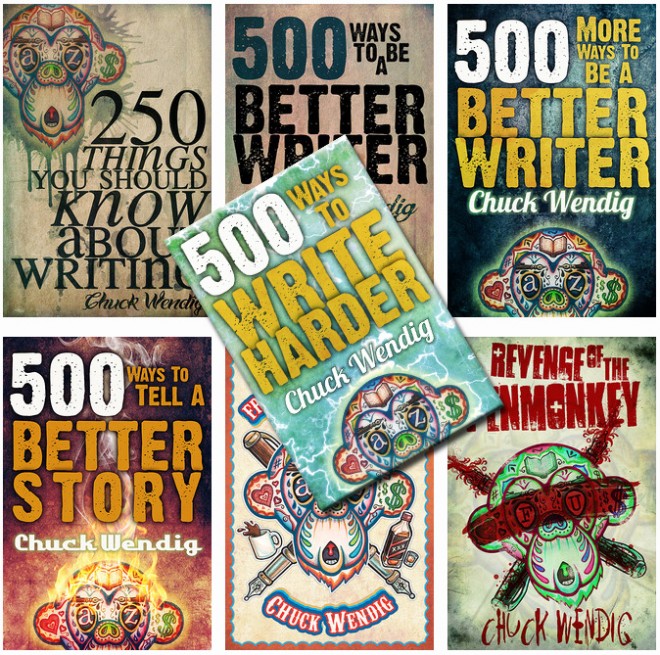
The Gonzo Writing E-Book Bundle:

Seven books. Twenty bucks.