Apple-Obsessed Author Fella

Category: The Ramble (page 144 of 478)

Yammerings and Babblings

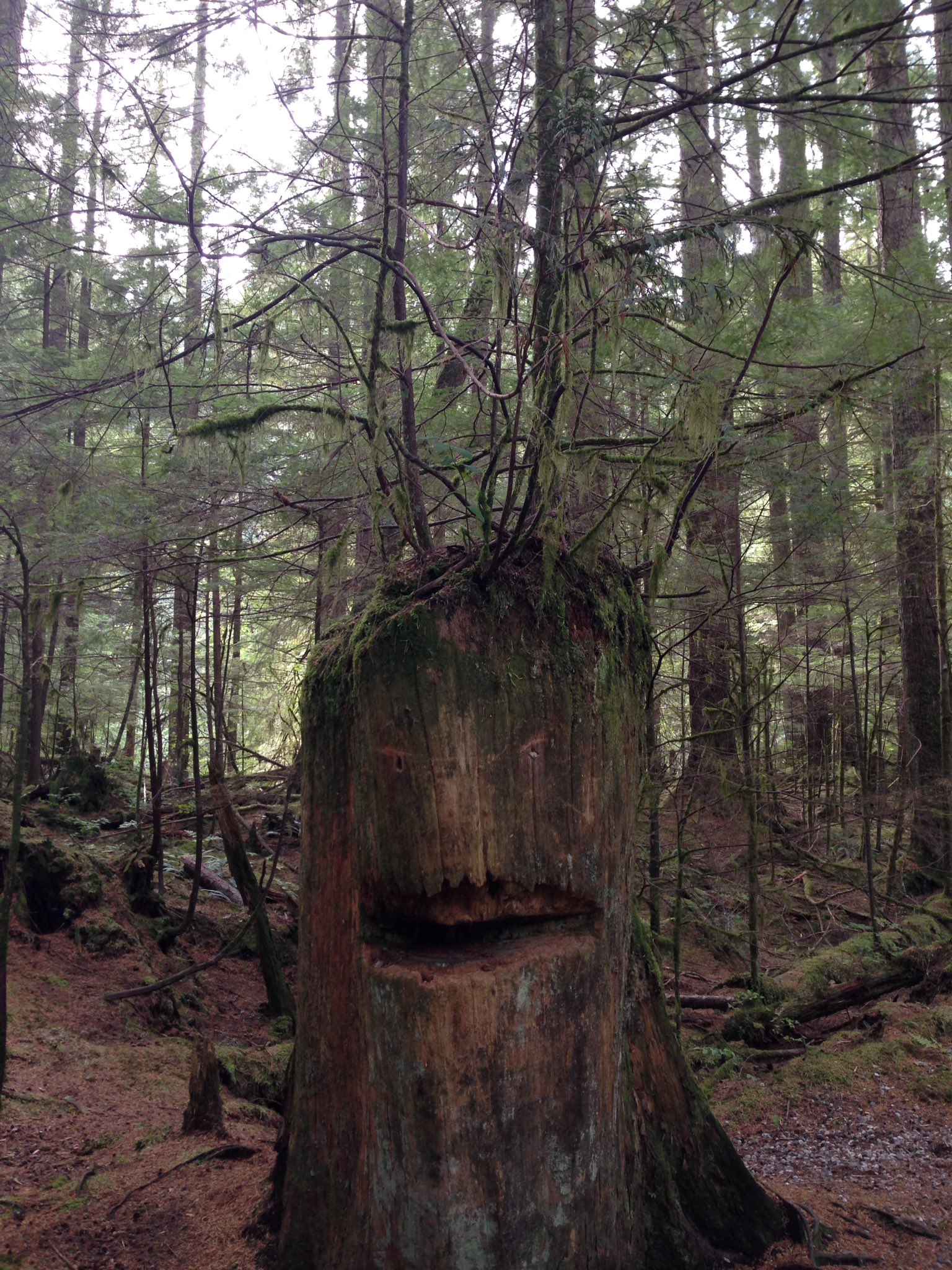
Flash Fiction Challenge: Write About A Tree

Trees are amazing.

Trees are givers of life in many ways.

Trees, like this one, can be weird or scary.

Your job, this week, is to write a 1000-word piece of flash fiction about — you guessed it, a tree. A tree must be involved. It can be a character or a setting or some other part of the tale. It can be good or evil or neither of the two. It can be part of a horror story, a redemptive tale, a fantasy story, a crime narrative.

Whatever you want.

Due by: October 6th, Friday, noon EST

Length: 1000 words

Write at your own online space.

Link back here so all can read.

Begin.

Alethea Kontis: Five Things I Learned Writing When Tinker Met Bell

Everybody knows that goblins and fairies can’t be friends. But that never stopped Tinker and Bell.

Bellamy Merriweather Larousse isn’t like the other fairies at Harmswood Academy, with her giant wings and their magical dust. “Southern Bell” works as a barista at The Hallowed Bean to help pay her tuition and remains active on the cheering squad, despite her insistence on associating with the unpopular crowd. Every day is sunny in Bellamy’s world and every cloud has a silver lining. The only way to upset Bell’s stalwart optimism is to threaten one of her misfit friends…or try to take one of them from her.

Unbeknownst to everyone–including him–outcast Ranulf “Tinker” Tinkerton is about to be named heir to the throne of the Goblin King, making him ruler of his fellow Lost Boys and the labyrinthine city they inhabit. Now that the time has come for Tinker to leave Harmswood behind, will he be brave enough to share his feelings for Bellamy? It’s no secret that he’s held a torch for her since the fourth grade, but no matter how long they’ve been friends, goblins will always be allergic to fairies.

Or will they?

* * *


IT IS POSSIBLE TO WRITE A BOOK WHEN ALL YOU HAVE IS A TITLE.

I met R.L. “Bob” Stine at a conference in San Diego in January and fell in love with him almost instantly. He’s that unassuming uncle everyone has at their family reunion, only everything that comes out of his mouth is smart and hilarious. I woke up at some ungodly hour of the morning to hear him deliver his breakfast keynote, sat in the front row, and took notes.

Bob Stine is the first author I’ve ever met who comes up with a title before even thinking about the rest of the story. (Say Cheese and Die being one of the most notable.) Once he’s settled on a title, he outlines the whole book. Only then does he sit down to write. How about that?

This was exactly what I needed to hear, exactly when I needed to hear it. Until then, I had been quite nervous that all I knew about my second Nocturne Falls book was that I wanted the title to be When Tinker Met Bell.

But one has to start somewhere, and there are certainly worse authors to emulate than Bob Stine. So I brazenly wrote down the title. Then I did the author thing. You know, the thing where we annoyingly ask questions about EVERYTHING.

Bell, the heroine, would be Bellamy Larousse,  my cheerleader fairy barista best friend from the first book. What about her hero? Tinker would be…Ranulf Tinkerton, a goblin. But goblins and fairies can’t be friends. Why? Because goblins are allergic to fairies. Great. Now I’ve gone from Harry and Sally to Romeo and Juliet. How am I supposed to make a romantic comedy out of that? Well, I’ll…crown Tinker heir to the throne of the Goblin King! Why? Because the Goblin King is immune to fairies…

Before I knew it, I was on Chapter Nine. But I could tell something was off, so I sent it to my editor. Turns out the problem was:

IT IS POSSIBLE TO WRITE A BOOK THAT IS TOO GOOD.

After reading those first nine chapters, Casey sent me an email. “Can you quickly come up with an entirely new story starring two characters named Tinker and Bell? Because this book is too good. You need to keep it for yourself.”

Unfortunately for both of us, I am not a fast writer.

The thing about writing in someone else’s Intellectual Property—even when authors are given as much free rein as Kristen allows us—you still have to remember that you’re writing for a particular audience. The Nocturne Falls audience wants comedy, sweet romance (read: no sex), and a paranormal twist. They don’t necessarily want a funny and romantic sweeping fantasy epic.

See…what I had ultimately done was build a goblin mythology that solved the Labyrinth problem. There are decades worth of discussions online about why Jareth is so hot and the goblins are so not. Pretty sure none of those theories used Peter Pan’s Lost Boys to answer the question. But answering the logic problems in fairy tales with other fairy tales is what I’ve spent the last decade or so doing, so that’s what I did.

Lest you think I’m patting myself on the back, that first nine-chapter revision (roughly 35,000 words) was probably the hardest thing I’ve had to do since I was asked to rewrite Hero back in 2012. I had to cut characters, motivations, touching scenes, and an incredible amount of worldbuilding. But I promised myself, and Casey, and I’ll promise all of you right now—I am going to go back and write that goblin book.

And I definitely want to keep my friends happy because:

FRIENDSOURCING CAN BE THE BEST THING EVER.

Frank Baum began all of his Oz books with a letter to his readers. He let them know how much their enthusiasm motivated him. Readers young and old asked questions, suggested plot lines, and sometimes “ordered” him to write certain books. How much of these got incorporated into Oz, I’m sure no one could say.

I have thousands of incredibly intelligent friends on Facebook: authors, artists, librarians, lawyers, forensic scientists…the works. So when my writing grinds to a halt because I needed the names of, say, a few extra goblins, I just ask Facebook. Because you KNOW that’s totally what L. Frank Baum would do!

These have become some of my favorite threads of all time.

Yes, there are always jokers—I delete the unhelpful comments—but I have huge lists now of names for shops, towns, witches, goblins, trolls, princes and princesses. I even have a list of drink names that might appear on the menu of a Halloween-themed coffee shop…and some of those names made it onto the cover of this book!

I don’t do this every time: Ranulf Tinkerton just popped into my head one morning. Maker Deng and Quin Merchero were carefully selected after hours of researching the Lost Boys of the Sudan and Spain. Dean Momori Zuru was born after several more hours of research on tanuki legends.

But sometimes a writer doesn’t want to spend hours. She just needs a seed. A spark. Suddenly, not only am I inspired by my amazing community, but they are also now part of my story. And magic, I always say, is better when shared.

At which point I was forced to admit:

MAYBE DATING THE DM WASN’T SO BAD AFTER ALL.

For years I have been telling young girls to “never date the DM.”

See, I acted in—or worked tech for—every single play in high school. There was a subset of us Drama Freaks who got together every once in a while to play D&D. The DM eventually became my boyfriend.

There are many problems with dating the DM, most of them revolving around the fact that you both know too much. You know how much work went into creating that campaign, because you were probably present for a good chunk of that. And he knows how to push your buttons if you try and use any of that information to your party’s benefit. You’ll be having some seriously awesome side adventure with an NPC…right before you’re handicapped so you can’t communicate valuable information to your fellow travelers.

Yeah. It’s possible I’m still bitter about the spell that magically removed my tongue. Then again, he’s probably still annoyed that Patrick and Casey remembered the sign language alphabet Mrs. Harris taught us in the fourth grade. I’m definitely still pissed about him killing off my Queen of Thieves. One day, I will write the novel in which she lives forever.

But for this book, I really just wanted to write a scene where a goblin, a kobold, a were-sloth and his human sister all play D&D in a small town coffee shop. Not only was it totally subversive, it instantly branded them as the super-smart, overly-dramatic, tightly-knit outcasts. I KNEW these kids. It was like coming home.

So…FINE. I now must confess to the world: Dating the DM in high school maybe wasn’t so bad after all. I just didn’t realize how long it would take me to learn that.

But it took me even longer to discover:

WHY CASEY SMILES.

Yes, the Casey that is my editor is the same Casey who played D&D with me all those years ago. We met the summer before seventh grade. We were eleven. We loved all the same books and movies, and we both dreamed of being writers. Casey was my first writing partner. Many of my stories—then and now—have characters based on her. She was my Minna, my Erin, my Sunday Woodcutter. She is my Bellamy.

She was also my Obi-Wan Kenobi. I may be known in genre circles for being the brash, glittery, optimistic princess, but I learned all that from Casey.

Casey and I may have been as inseparable as Anne Shirley and Diana Barry, but back then, I was the moon to her sun. I was the dark to her light. (There’s a reason Sister Light, Sister Dark is my favorite Jane Yolen book.) She was a cheerleader, beloved by all, and I was a Poe-loving closet-Goth. People were often astonished that we were best friends.

Without Casey, and the optimism she taught me to incorporate into my own life, I’m not sure I would have survived my teenage years.

I have always given Casey credit for making me the Princess I am today. But until I sat down and asked myself one of those annoying writer questions—Why is Bellamy so optimistic?—it never occurred to me to ask Casey why she always was the way she is.

Thirty years and I never asked this question.

God, I was a shitty friend.

The answer was as simple as I expected it to be, but even more tragic. I knew Casey’s father had died when she was a little girl, but I had no idea how many close family members died horrible, unexpected deaths in that decade before we met. Casey’s off-the-charts optimism was her way of coping with life’s inevitable sadness.

Little did Young Casey know that her optimism would one day inspire another girl, a girl who lived to be a woman with a subversively magical life, who has written almost twenty books contributing to the delinquency…er…optimism of minors all around the world.

Wise Uncle Iroh said, “If you look for the light, you can often find it.” My light is, and has always been, Casey.

And thanks to When Tinker Met Bell, now I know why.

* * *

Alethea Kontis is a princess, author, fairy godmother, and geek. Author of over nineteen books and contributor to over twenty-five more, her award-winning writing has been published for multiple age groups across all genres. Host of “Princess Alethea’s Fairy Tale Rants” and Princess Alethea’s Traveling Sideshow every year at DragonCon, Alethea also narrates for ACX, IGMS, Escape Pod, Pseudopod, and Cast of Wonders. Alethea currently resides on the Space Coast of Florida with her teddy bear, Charlie. Find out more about Princess Alethea and the magic, wonderful world in which she lives at: patreon.com/princessalethea

Alethea Kontis: Twitter | Facebook | Patreon | Website

When Tinker Met Bell: Amazon | Nook | Kobo | iBooks

Fran Wilde: How To Build A Monster!

Somehow, Fran Wilde keeps stealing the keys to terribleminds and posting her drawings and spreading her knock-knock joke propaganda all over the place. I keep changing the locks, but damnit, she’s wily. And apparently she’s convinced me to leave the comfort of THE FOREST to come to THE CITY tonight to celebrate the launch of her final Bone Universe novel at Barnes & Noble Rittenhouse in Philly? Frandamnit!

* * *

Question 4: How Do You Build A Monster?

Heyyyy Chuck! It’s been a while!

I know I’ve been busy finishing the Bone Universe trilogy and sourcing cupcakes with your face on them for our event at Barnes & Noble Rittenhouse Square on 9/26 at 7 pm (RSVP and JOIN US, FRIENDS!), but I’m also aware that I have responsibilities to attend to Questionable Answers.

Today’s Question is “How Do You Build A Monster.” I won’t say who asked, but you may want to check B-Dub’s arts and crafts box. Hope your readers enjoy!

Ready?

* * *

Fran Wilde’s novels and short stories have been nominated for two Nebula awards and a Hugo, and include her Andre Norton- and Compton-Crook-winning debut novel, Updraft (Tor 2015), its sequels, Cloudbound (2016) and Horizon (2017), and the novelette “The Jewel and Her Lapidary” (Tor.com Publishing 2016). Her short stories appear in Asimov’s, Tor.com, Beneath Ceaseless Skies, Shimmer, Nature, and the 2017 Year’s Best Dark Fantasy and Horror. She writes for publications including The Washington Post, Tor.com, Clarkesworld, iO9.com, and GeekMom.com. You can find her on Twitter, Facebook, and at franwilde.net.

She’s been sending Questionable Answers to Terrible Minds since 2015. And tells GREAT knock knock jokes…

A Message To My Younger Writer Self

I just did a series of tweets (which needs a better collective noun — the cool kids call it a “thread,” but perhaps a “regurgitation” is a better descriptor? — about some stuff I’ve been thinking about since I did a workshop aimed at teens this past weekend at B&N’s Bethlehem store. It’s all about who you are as a writer and WHY you are a writer and WHY you write and — well, I’ll let the regurgitation speak for itself.

Here are those tweets, or you can just click through to the Storify directly.

Macro Monday Says, Buy Some Books, Help Puerto Rico

First up, let’s get this out of the way —

Puerto Rico is undergoing a humanitarian crisis thanks to Hurricane Maria.

It’s not good, and it’s getting worse.

It’s devastation, literally and emotionally, for the people of Puerto Rico — which, please remember, is an American colony that already gets the short-end of the stick, and it exists under a president that right now feels very comfortable railing about NFL players taking a knee to protest the oppression of black lives but who apparently has little interest in shining a light on an ongoing American crisis.

Anyway, to get to the meat of it —

For Houston, I donated sales to two of my books (Blue Blazes and Hellsblood Bride) to Americares. (As such, I was able to donate $250.) This time, I’m going to donate profits of my Mega Writing Bundle to the Hispanic Federation, taking a page from Lin Manuel Miranda. You are of course able to donate directly to that charity! But, for the next seven days, if you grab a copy of the Writing Bundle, which gets you ten books for twenty bucks (eight writing books and two novels), you’ll also be donating to the Hispanic Federation.

[Link to Writing Bundle: here]

[Also, Lin Manuel’s Twitter account is worthy of a follow, not just because it’s Lin Manuel, but also because he’s been charting some of the help that the Hispanic Federation is doing for PR.]

Anyway!

Other Updatery-Floo-Dee-Doo

Tomorrow, Good Lord Willing and the Creek Don’t Rise, I’ll be in Philadelphia at the B&N Rittenhouse Square to help Fran Wilde usher in the third and final book in her Bone Universe series. (The one caveat is we’re dealing with a small bronchial plague in Das Wendighaus, so that’s a variable. I’m doing okay, my wife less so, so I’m hoping to make it.)

Then, next week I’m off to Pelee Island for the Pelee Island Writers Retreat.

Then: NYCC.

Then: back with Fran and Kevin Hearne in San Francisco (Borderlands!) on October 17th, Portland (Powells!) on Oct 18th, and Seattle Oct 19th. Quick deets at Kevin’s blog! Kevin is launching his most excellent Plague of Giants, Fran’s rocking Horizon, and I’ll be launching my new book about narrative and storytelling, Damn Fine Story.

Then: home again.

Uhh. What else?

Exeunt remains a giant book. I’m pretty sure I should be done it by now. It’s 800 pages (in Word), currently 182,000 words, and it just… keeps… going.

Invasive is still on sale: $4.99. Zer0es is, too. And the third Miriam Black book, The Cormorant, is now $3.99 for Reasons Unknown and for Timeframe Unclear.

I think that’s it for now.

Onto the macros.

The first of which I love very much:

Because though you’ve seen the ladybug, you haven’t seen the spider.

And another cool camouflaged spider:

Here, have some weird fungus! It’s in your brain now! It’s taking over!

And that’s it for now.

You can always find more of my pics at my Flickr account.

Shine on, you cuckoo rhinestones. Shine on.

Walt Williams: Five Things I Learned Writing My Memoir

Making a video game is like working for a blood-thirsty dictator – you spend a lot of time validating the player, who just wants to shoot people in the face. And if there’s one thing Walt Williams has learned from working in the blockbuster game industry, it’s that nothing good comes of validating people who aren’t him.

After his misguided attempts to become an air force chaplain, Williams made the bold choice to move from Louisiana to New York City to try his hand at becoming a writer. All it took were a few dead-end writing gigs and a depleted bank account for him to take an entry-level position at a top video-game publisher, opening his eyes to a brave new digital world.

In his revealing memoir, Williams pulls back the curtain on life inside the astonishingly profitable yet compulsively secretive game industry. Informative and comically irreverent, Walt exposes a world abundant in brainpower and outsized egos struggling to find the next great innovation.

ALL THE WORDS WERE MINE

This may seem like common sense, but somehow this came as a surprise to me. You see, I’ve spent the last twelve years exclusively writing video games. Writing a game is like writing a screenplay, except that every page or so, I write, “Bad guys appear; player fights them,” and then pick up writing ten to fifteen minutes later in the story. On top of that, the script is written while the game is still being developed. Characters, dialog, locations, set pieces, action beats – all can vanish or change at any moment. Writing games can be a dizzying, thankless endeavor. Sometimes it feels like speeding down a hill in a shopping cart while trying to disarm a bomb with a dull pencil. That’s why I love it.

Writing Significant Zero was different. There was no player, artist, or level designer waiting to step in and take control. I didn’t know what to do with that freedom. I’d spent so many years putting words in the player’s mouth, that I’d forgotten what it was like to have a voice of my own. It took the entire writing process for me to grow comfortable with my own words. Even now, I worry that certain parts might not be relatable to every possible reader. That’s the game writer in me. I shut him up by reminding myself that a book doesn’t have to be everything to everyone. A player wants to experience a game on their own terms, but a reader wants to step into the author’s mind and discover what joy and horror await them.

“HONESTY IS THE BEST POLICY” ONLY APPLIES TO YOU

When I called my father to tell him I’d sold my book, the first thing he said was, “Son, I’m proud of you.” He then followed it up with, “I hope they’re paying you enough to make it worth pissing off all your friends.” That was something I had not considered.

When you write a memoir, you quickly realize that your stories are not yours alone. They also belong to your friends, family, and coworkers, none of whom asked to be in a book. So, I decided the only person who’d get thrown under the bus was me. This doesn’t mean I altered stories to make other people look better. I just went out of my way to use anecdotes that made me look worse. And do you know what happened when I did that? My book became more interesting and relatable. No one needs a book that makes my friends look bad. But a book about how I’m an idiot who somehow turned out okay is a book that might actually be worth reading. Of course, pulling that off is harder than it seems…

I HAD TO BECOME A CHARACTER

Writing about the past is hard, because we’re constantly changing who we are and how we feel. Whether we age like a fine wine, or devolve into some kind of primal, mutant jackass, we tend to view our past through the filter of our present. We judge ourselves, edit our memories to better fit our personal narrative, and even delude ourselves into believing things that never happened. It’s natural. Everyone does it. When writing Past Walt, it would have been so easy to smooth out his rough edges, make him seem cooler or more competent. Believe me, it was tempting. No one ever would have known, except for me and anyone who’d talked to me for longer than fifteen minutes.  But – and this is important – you’re not allowed to do that if you’re writing a memoir. When telling a true story, you can’t make shit up, even if it’s funnier. Non-fiction is tricky that way. To stop myself from falling into that trap, I had to mentally disconnect myself from Past Walt, and write him like he was a character, rather than a reflection of who I am today. His actions had to exist without my commentary or hindsight, leaving you to decide whether he’s charming, insufferable, or just kind of a dope.

FEAR WAS MY FRIEND

The further I got into the book, the more vulnerable I felt. I was scared of what people would think, not of the book, but of me as a person. My flight instinct would kick in, and I’d have to stop myself from erasing or reworking whole sections just to save myself from scrutiny. Eventually, I began to recognize my fear as a sign that I was on the right track. If I felt nothing that meant my writing was safe or inconsequential. However, if I was afraid… if I suddenly felt the need to fake my own death and run away to the wilds of Montana… then I knew I was writing something true. My fear became my compass. Every time I sat down to write I had to find it, feel it, and then dive in as deep as I could go.

YOU’VE DONE MORE THAN YOU KNOW

I once believed there were only four types of people who should write memoirs: rock stars, presidents, people who almost died, and those who were about to die. Everyone else lacked the experience necessary to write a memoir. Sadly, I am not America’s first rock star president who famously cheated death, buffed up, and then died again, all so I could kick the Grim Reaper’s ass. And that’s not for lack of trying. Still, what have I done that’s worth writing about? Everything, really. Same goes for you. Life can seem rote, but living through it is rarely boring. When writing about the past, describing an event is sometimes less important than how it felt. The feeling is what left an impression. That shared language of emotion is the one thing you and the reader will always have in common. When spoken properly, even the smallest actions can seem grand.


* * *

Walt Williams lives in Louisiana with his wife and daughter, where he splits his time between writing and failing to keep his flowerbeds alive. He’s known mostly for writing video games, in particular SPEC OPS: THE LINE and the upcoming STAR WARS: BATTLEFRONT II.

Walt Williams: Twitter | Instagram | Website

Significant Zero: Indiebound | Amazon | B&N | iBooks | Audible