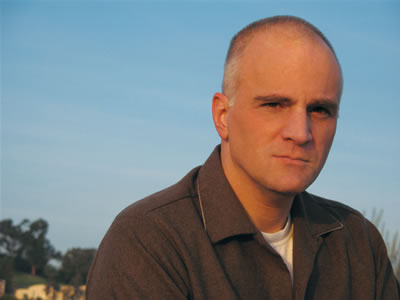
Chuck Wendig: Terribleminds

Apple-Obsessed Author Fella

Archives (page 413 of 475)

Ten Things You Should Know About Writing Screenplays

This week, terribleminds is moving hosts. We got too big for our britches and we’re fleeing the warm embrace of Laughing Squid and diving deeper into the trenches of a LiquidWeb VPS server. I’m not anticipating any downtime, but one never knows in such an instance what will happen. So, I figured this wasn’t a good week for an entirely brand new “25 Things” list.

What I am doing, however, is giving you a tasty chocolate Whitman sampler of “25 Things” — these have never before been on terribleminds but can instead be found in their entirety in my writing books.

You’ll find this works on the following schedule:

Monday:

10 (of 25) things you should know about setting! (from 500 More Ways To Be A Better Writer)

Tuesday:

1o (of 25) things you should know about endings! (from 500 Ways To Be A Better Writer)

Wednesday:

10 (of 25) things you should know about screenplays! (from 250 Things You Should Know About Writing)

Let us begin.

10 Things You Should Know About Writing Screenplays

1. Just A Blueprint

A novel is a finished product. A film is a finished product. A screenplay is just a blueprint. It’s just a template. You’re creating the possibility of a film, not the final product. Let that free you.

2. Writing To Be Read Before Writing To Be Seen

A script has to read well before it ever makes it onto a screen. Nobody reads a shitty script and says, “This sucks out loud on the page, but boy, it’s going to look awesome on the screen.” Well, okay, Michael Bay might say that. But then he rides his cyborg tiger into the heart of an atomic cloud to the tune of some Aerosmith song. You can’t hold that guy’s attention for long.

3. Story Is King, And The Characters Serve At His Pleasure

A screenplay fails first because of its crapgasmic story. Not just plot: but story. Story is all of it: plot, characters, theme, mood. You’re trying to say something, trying to tell a cracking good tale. Characters are the vehicle for that story. We’re going to spend two hours with, what? Boring characters? Dull story? Unlikable and unbelievable plot?

4. The Three-Act Structure Matters

I know. You want to fight against the three-act structure. You want to kick and spit and break the bonds of this straitjacket The Man has slapped you into. Don’t. The three-act structure is here to stay. Trust me when I say, producers and directors look for it. They seek those act breaks. Here’s the trick, though: the three acts are nowhere near as limiting as people believe. They’re very easy and translate roughly to Beginning, Middle, and End. And out of each act is a turn, a pivot point of change and escalation. Hit those acts at 25%, 50%, and 25% of your script’s total length (Act I, II, and III, respectively) and you’re golden.

5. The Secret Act Break Smack In The Middle Of The Script

Don’t tell anybody else. I’m sharing this just with you. Take off your pants and I’ll tell you. Are they off? Sweet. HA HA HA HA JUST KIDDING NOW YOU’RE PARTLY NAKED AND VULNERABLE AND NOW I WILL ATTACK YOUR PRIVATE PARTS WITH BEES. … okay, that was weird. I’m so sorry. Anyway. Here’s the secret: the second act can really be two acts with the act turn smack dab at the midpoint of the whole script. Treat these like any act: escalation leads to an act turn which means some kind of pivot or change, both external and internal. Ta-da! That’ll help you fight the sagging mushy gushy lardy middle of your screenplay.

6. 90-110

Your script should be between 90-110 pages. Especially if it’s a spec script. Going to 120 pages is… regrettable, but doable. Going above 120 or below 90 can be death for your script.

7. Search Your Heart For Truth, Sacred Cricket

You’re committing time and energy to writing this thing, so figure out why. Figure out what you’re trying to say and what kind of story you want to tell. Know the reason your script must exist. “I want to write a tragic love story set in space.” “I want to highlight the horrific industry of dolphin-killing.” “I HATE MY DAD AND I WANT THE WORLD TO KNOW IT.” Whatever, man. Just find your reason. Let it live at the throbbing heart of the script.

8. Too Many Characters Foul The Orgy

A script with too many characters feels hazy and crazy. It’s like making a soup with too many spices or having an orgy with too many participants. Then it just becomes a greasy, smelly game of Twister. “Left leg, some guys pubic tangle. Right leg, shellacked with a heady broth of somebody’s man-seed. AHHH DICK IN MY EYE.” Keep major characters to about five. With maybe another 10 to 15 lesser characters if need be. But remember: they all need to be fully realized, at least in your own head.

9. Babar, Meet Rebar, And His Brothers, Robar, Zadar, And Radar

If your two lead characters are Gary and Mary, or Bob and Rob, the reader is going to get confused. I know, you’re saying, “What kind of asshole can’t figure out the difference between Bob and Rob?” The kind that reads hundreds of scripts per day and has suffered irreparable eye and soul damage from reading the unmerciful shit-fuckery submitted to them by subpar screenwriters, that’s who.

10. Narrative Rejiggering

Some screenplays suffer from a necessary slow build, but a slow build threatens to derail the reader’s attention. So go mess with the narrative flow — change the time-line. Start at the ending. Or in the middle. Somewhere dramatic. Break the narrative up into a switchback flow, ala 21 Grams or Reservoir Dogs. You can play with the timeline in order to adjust the revelation of plot. What happens then is revealed now. What happens now is revealed later.

Want the whole 25? Then I point you toward 250 Things You Should Know About Writing, merely $0.99 at Amazon (US), Amazon (UK), B&N, and also available here at terribleminds.

Ten Things You Should Know About Endings

This week, terribleminds is moving hosts. We got too big for our britches and we’re fleeing the warm embrace of Laughing Squid and diving deeper into the trenches of a LiquidWeb VPS server. I’m not anticipating any downtime, but one never knows in such an instance what will happen. So, I figured this wasn’t a good week for an entirely brand new “25 Things” list.

What I am doing, however, is giving you a tasty chocolate Whitman sampler of “25 Things” — these have never before been on terribleminds but can instead be found in their entirety in my writing books.

You’ll find this works on the following schedule:

Monday:

10 (of 25) things you should know about setting! (from 500 More Ways To Be A Better Writer)

Tuesday:

1o (of 25) things you should know about endings! (from 500 Ways To Be A Better Writer)

Wednesday:

10 (of 25) things you should know about screenplays! (from 250 Things You Should Know About Writing)

Let us begin.

10 Things You Should Know About Endings

1. Behold My Clumsy And Confusing Definition

Let’s pretend for a moment that the end is a hazy thing — it doesn’t begin at any precise point and counts the nebulous territory between “the beginning of the end and the last moment of the story that reaches the reader’s mind.” The ending is when there’s no turning back, when the story can’t be stopped, when everything’s in motion and moving forward like a racehorse on angel dust.

2. Okay, Fine, You Won’t Stop Staring At Me So Here’s Your Goddamn Definition

If you want the technical definition, then the ending begins at the start of the final act — in screenwriting, it begins at the end of the third act. It encompasses the climax of the piece and then tumbles forth through the falling action and into the denouement. It is triggered by the turning point (or pivot) into the final act, which sets up the final conflict and resolution of that conflict. There. Are you happy now? *sob*

3. Boom Goes The Dynamite

The climax and falling action are the flashier components of the ending — this is the big-ass fireworks finale where everyone goes ooooh and ahhh and stares into the pretty lights and receives commands from their alien masters on when precisely to assassinate the Archduke. Or whatever. Know that the climax is when, metaphorically or literally, everything explodes. The falling action is the picking up of those pieces and the rearrangement of those pieces. The zeppelin blows up — CHOOM! (the climax) — and then as it sinks toward earth the hero’s mission to save the lovely lass is in question as the antagonist’s plan appears to be successful. But the hero has his mad hero skills and turns the tide and saves the girl and slays the antagonist and has a litter of puppies, blah blah blah. Note that some stories conflate climax and falling action into one moment: I’d argue that STAR WARS does this, tying everything up with the Big Boom of the Death Star going kaflooey. (Yes, “kaflooey” is a technical term.) DIE HARD doesn’t — the big explosion on the roof is your climax, and McClane versus Hans is the falling action (er, quite literally!).

4. All The Little Strings Tied Around Fingers

The denouement is not a critical component and some stories just say, “Fuck it,” and kick it into the mouth of a hungry alligator to be eaten and forgotten. The denouement (it’s French, and pronounced Day-NOO-MAAAAWWHHHH, with that last syllable comprising about 42 seconds of actual vocal time) and offers what you might consider “narrative clean-up.” It takes all the niggling details and ties them into little bows. Sometimes a denouement is just a handful of moments — again, in DIE HARD, it’s that short scene as they leave Nakitomi Plaza. In RETURN OF THE KING, it’s the last 6,000 minutes as the audience bears witness to a endless procession of hobbit-flavored not-quite-happy endings! Mmm. Hobbit happy endings. Tiny hands. But so soft.

5. A Good Ending Answers Questions

A story raises questions both within the story and outside it — “Will Steve woo Betty? Will Orange Julius save Cabana Boy from the jaws of The Cramposaur? Can love survive in the face of war? Is bacon overrated?” A good ending takes these questions and answers them. Most mysteries are solved. Most concerns are answered.

6. A Great Ending Asks New Questions

An author should never be afraid to let an ending ask new questions heaped upon the answers of the old. Yes, these questions, the ones you introduced, are addressed — but things, then, needn’t be so simple. Exposing the truth might force the reader to ask new questions, and those questions are likely to never be answered (unless there’s another story in the sequence). That’s okay. Hell, that’s not only okay: that’s awesome. That leaves people thinking about the story. It doesn’t just close the door and kick them out of the house — it Manchurian Candidates those motherfuckers (yes, I turned that movie title into a verb, shut up) and leaves the story top-of-mind.

7. Time To Confirm Or Deny Your Theme

Your story is an argument — a thesis positing a thematic notion, an idea, a conceit. The ending is where you (purposefully or inadvertently) prove or disprove that thesis. It’s when you say, “Man will embrace nature over nurture.” Or, “True love won’t save the day.” Or, “Yes, indeed, Fruit Roll-Ups are secretly the leathered skin of popular cartoon character such as Smurfs and/or Snorks.”

8. Endings Don’t Need To Be Pat

I dunno who “Pat” actually is, but my assumption is that he’s a nice guy and everything works out for him. When an ending is pat, it’s the same way: it’s a nice ending, and hey, lookie-loo, everything works out just dandy. You are not required to create nice, neat, tidy little endings — an ending shouldn’t look like a Christmas ornament designed by Martha Stewart.

9. Sometimes, A Nice Neat Happy Ending Is Appropriate

Sometimes, sure, okay, you want a happy ending. Here’s the difference, though, between a happy ending and a pat ending. A “pat” ending ties things up artificially — it uses coincidence and narrative hand-waving to bring disparate elements together and make sure everything is all toothy smiles and unicorn hats and rainbow poop.

10. Dominoes Tumbling Ineluctably Forward

An ending should feel natural. Like it’s the only ending you could write. That’s nonsense, of course — you have a theoretically infinite number of endings you could write — but as you write, all the elements will start to feel like they’re moving toward one thing, one way that they all sum up. Once you write it and once the audience reads or sees it, they should all feel like it’s the only ending the story deserved — an unswerving and inarguable narrative conclusion.

Want the rest of this list? Check out 500 Ways To Be A Better Writer, available for $2.99 at Amazon (US), Amazon (UK), B&N, and also available direct from terribleminds.

Ten Things You Should Know About Setting

This week, terribleminds is moving hosts. We got too big for our britches and we’re fleeing the warm embrace of Laughing Squid and diving deeper into the trenches of a LiquidWeb VPS server. I’m not anticipating any downtime, but one never knows in such an instance what will happen. So, I figured this wasn’t a good week for an entirely brand new “25 Things” list.

What I am doing, however, is giving you a tasty chocolate Whitman sampler of “25 Things” — these have never before been on terribleminds but can instead be found in their entirety in my writing books.

You’ll find this works on the following schedule:

Monday:

10 (of 25) things you should know about setting! (from 500 More Ways To Be A Better Writer)

Tuesday:

1o (of 25) things you should know about endings! (from 500 Ways To Be A Better Writer)

Wednesday:

10 (of 25) things you should know about screenplays! (from 250 Things You Should Know About Writing)

Let us begin.

10 Things You Should Know About Setting

1. What Is It?

Setting anchors your story in a place and a time. A short story or film may hover over a single setting; a longer-form film or novel may bounce across dozens of setting. You often have a larger setting (“The town of Shartlesburg!”) and many micro-settings within (“Pappy’s Hardware! The Egg-Timer Diner! The Shartlesburg Geriatric Sex Dungeon!”).

2. What Does It Do For You?

It props everything else up. It’s like the desk on which you write — it has function (it holds up all your writing tools, your liquor bottles, your Ukranian pornography), it has detail (the wood is nicked from where you got into that knife fight with that Bhutan assassin), it has an overall feel (the desk dominates the room, making everything else feel big — or perhaps the opposite is true, where the desk is crammed into the corner like you’re some third-rate citizen). Setting props up plot, character, theme, and atmosphere. And it gives the audience that critical sense of place and time so it doesn’t feel like she’s floating around in a big ol’ sensory-deprivation tank of recycled amniotic fluid. Which does not, despite its appearance, smell like bubble-gum.

3. Establish That Shit Early, Then Reveal Gradually

You don’t want to keep the reader in the dark as to the setting, because it’s disorienting and disconcerting. Even if the character on the page doesn’t know, you the author sure do, and it’s up to you to provide those hints (“She hears a church bell ringing and smells the heady stink of hobo musk”). You don’t need to spend two paragraphs outlining setting right from the get-go, though — we just need that filmic establishing shot to say, “Ohh, okay, we’re in a convenience store next door to an insane asylum. Boom, got it.” Then, as you write, you over time reveal more details about setting as they become important the story. Revealing setting should be a sexy striptease act. A little flash of skin that gradually uncovers the midriff, then the thighs, then the curve of the blouse baboons, then the OH MY GOD SHE HAS A TENTACLE IT’S GOT MY MMGPPHABRABglurk

4. Setting As Character

It may help to think of setting as just another character. It looks and acts a certain way. It may change over the course of the story. Other characters interact with it and have feelings about it that may not be entirely rational. Think about how, on those awful (and totally fake!) house hunting shows on HGTV someone’s always looking for a house “with character.” That means they want a house that is uniquely their own, that has, in a sense, a personality. And probably a poltergeist. Houses with character always have poltergeists. That’s a fact. I saw it on the BBC and British people cannot lie. It’s in their regal charter or something.

5. Paint In As Few Strokes As Possible

Play a game — go somewhere and describe it in as few details as possible. Keep whittling it down. See how you do. This is key for setting description (and, in fact, all description). Description must not overwhelm.

6. Exercise: Three Details And No More

Find any place at any time and use three details to describe it. You get to paint your image with three strokes and no more.

7. What Details? The Ones The Audience Needs To See

The details you choose are the ones that add to the overall story. Maybe they’re tied to the plot. Maybe they enhance the mood. Maybe they signal some aspect of the theme. Maybe offers a dash of humor at a time when the story really needs it. Each detail has text and subtext — the text is what it is (“a toilet”). The subtext is what it adds to the deeper story (“the toilet’s clogged and broken like everything else in this building, spilling water over the bowl rim” — saying this adds to the overall atmosphere and theme offered by the setting).

8. Abnormalities Are Your Friend

Another tip for finding out which details matter most: they’re the ones that break the status quo. It’s like this: I know what a Starbucks looks like. Or a pine forest. Or a men’s restroom. You don’t need to tell me that the restroom has a sink, a floor, a lightbulb, a toilet. You need to tell me there’s a mouse crawling around in the sink. That the fluorescent light above is flickering and buzzing like a bug zapper. You need to show me the weird guy sitting in stall three playing with himself while reading an issue of Field and Stream magazine. (“Oh. Yeah. I’m gonna stick it deeeeeep in your basshole.”) Show me the details that break my expectations. Those are the details that matter.

9. The Reader Will Do Work For You

No, I don’t mean the reader will come to your house and grout your kitchen. Or maybe they will? I should look into that. Anyway. What I’m saying is, the reader will fill in many of the details that you do not. In a variant of what I just said above, it’s your job to give the reader the details that she cannot supply for herself.

10. Description Should Be Active And Action-Based

Describe the setting as a character moves and operates through it — which means that it features action and takes into account that character’s point-of-view. You don’t introduce the Shartlesburg Geriatric Dungeon by giving a paragraph of setting description before the character even steps into the room. As the character sees it, the reader sees it. As the character picks up that riding crop that smells like Vicks Vaporub and horehound lozenges, the reader picks up the same.

(Check out the full “25 Things You Should Know About Setting” in the complete 500 More Ways To Be A Better Writer, available at Amazon (US), Amazon (UK), B&N, and direct from this site.)

Bait Dog: Second Book Unlocked!

And we did it!

We unlocked not just one but two new Atlanta Burns novels.

Which geeks me out to no end.

Now I will pause to do a happy dance. And fire my shotgun up in the air.

But — but! — we’ve still got six whole hours left.

If we get to $9000 by the close of the Kickstarter, that will unlock a third Atlanta Burns novel.

Holy crap.

Can we do it? I don’t know. The power of the Internet is glorious and weird.

I will add here that anybody who pledged at the $25 rate and higher gets an e-book copy of each unlocked novel (in the e-book format of your choice). So, if we unlock three novels, at the $25 and up level you get three novels. The more novels unlocked, the greater value the pledge brings.

Thanks all who supported it and spread the word.

Let’s see where we land with this thing, yeah? Eeee!

Flash Fiction Challenge: “The Fire Of The Gods”

Last week’s “I’ve Chosen Your Words” challenge was a tricky one, but some admirable tales came out of that one. You will go and check it out, won’t you? Good.

This week, I talked a bit about creativity and said that it was the fire we stole from the gods.

And I thought, “Hmm. Fire.”

Fire.

FIRE.

Excellent.

Last week I gave you words, this week, I give you a title:

Your story will be titled: “The Fire of the Gods.”

And that’s it. That’s all I demand of you.

Well, besides the standard parameters, of course. The story must be under 1000 words. Post it at your blog (not in the comments here, or I may delete it), then link back so we can all see it.

You’ve got the traditional week. Get the stories in by Friday, March 23rd, noon EST.

Now write, won’t you?

Nathan Long: The Terribleminds Interview

When Stephen Blackmoore says, “Pay attention to this author,” I pay attention. In part because Blackmoore is wise. In part because I figure maybe Blackmoore’s warning me about some author who’s trying to stab me with a shattered absinthe bottle because said author is jacked up on two dozen five-hour-energy-drinks. In this instance, Blackmoore pointed me to Nathan Long because he’s a smart guy with a new delicious pulpy book out — Jane Carver of Waar. Further, Nathan’s a guy with a lot of game-related tie-in fiction under his belt which I think appeals to you crazy cats and kittens. So, here he is. Meanwhile, find him at his website — sabrepunk.com. Or on the Twitters — @Nathan_R_Long.

This is a blog about writing and storytelling. So, tell us a story. As short or long as you care to make it. As true or false as you see it.

A few years back, I was head writer on a Saturday morning adventure show called Kamen Rider Dragon Knight, which was of the same genre as Power Rangers and Beetle Borgs, etc, only slightly more adult and ambitious. It was funded by an independent Japanese production company, basically two guys who had made some movies, but who had never done TV before, nor done any business with TV people. This meant they ended up putting a lot of their own money into it up front and praying really hard that someone would buy it somewhere on down the line.

Now, at the beginning, these producers told us they wanted Kamen Rider Season One to be 40 episodes long, which struck us as an odd number, but whatever. If that’s what they wanted, that’s what we’d give ’em. I wrote out a big 40 episode arc, which took our hero Dragon Knight on an epic journey of self discovery and self sacrifice, while at the same time allowing him to kick serious ass on a lot of monsters – and of course save the world. It was a rich and complicated a plot, probably too rich and complicated for Saturday morning, thinking back on it, but like I said, we had ambitions.

Anyhow, on the Monday of the week when we were shooting episode 23, and I was busy cleaning up the scripts for the next three, I got a call from the producers saying they were short on money, and that, instead of 40 episodes, we were only going to do 36, and could I replot the story so it would end four episodes earlier than previously planned.

Well, that sucked, but whatever. These things happen in Hollywood. So I dropped everything and got to work replotting, and had the new plot all worked by Tuesday afternoon, just in time for the producers to call and tell me that, actually, they only had money to do 30 episodes, and could I shorten it again. This time it was a lot tougher. I had a whole shitload of interweaving story lines running, and now I only had seven episodes to tie them up, instead of thirteen. But I did my best and had a new outline sorted out by Wednesday afternoon, at which point the producers called again and said the money situation was really, really bleak, and we were only going to be able to shoot one more episode, so could I wrap the whole series up in one final twenty two page script.

By this time I was tearing my hair out, but I sat down once more, pulled an all nighter, and came up with an outline for a script that, while not great, would at least pay off the main plotline and give the lead character’s arc some kind of resolution. Then, just as I was printing it out on Thursday morning and getting ready to bring it into the office, I got a further call from the producers. They had resolved their money issues. We were back on for 40 episodes. Could I put it back the way it was before.

That I stand before you a free man, and am not currently doing time for first degree murder is entirely because I work from home, and my homicidal rage was spent upon an entirely innocent office chair and an Ultra Man action figure that just happened to be at the wrong place at the wrong time. Had I been at the production office, things might have gone very differently.

So, what is the moral of this tale of woe? I think it is this. A professional writer must be able to adapt to whatever changes are asked of him. He must also be ready to change his mind, and to remember that there are a thousand ways to tell every story – and that sometimes he’ll be asked to use every one of them.

Why do you tell stories?

Because I can’t stop. Because stories are secular church. They tell people how to be and how to live. Because real life has no satisfying endings, so we gotta make ’em up. Because I always loved reading stories, but there were some that weren’t being told, so I had to tell them. Because nothing else has ever held my interest for more than five minutes.

Just because.

“Stories are secular church.” What’s a good writer’s prayer? Or storyteller’s mantra?

Dear God of the Beginning, the Middle and the End, may my tale feel natural and unforced. May my meanings be clear and my intentions understood. May my endings elicit the emotion I intended them to. May I reach the reader that needs to be reached, and inspire (or at least amuse) the downhearted. Forever and ever, Amen.

Give the audience one piece of writing or storytelling advice:

Know the ending before you begin. I’m not saying you have to know it in detail, but you should know where you want to go. A good story makes a point. It isn’t just some events and characters strung together on a timeline. It works toward a conclusion, and if all you’ve got when you start writing is a hero, a setting and a conflict, you don’t have a story, you have a box of ingredients. You may find a story along the way, but it’s a hell of an inefficient way to go.

I don’t start until I know that “She’s going to chose honor over family,” or “He’s going to realize he’s an spoiled jerk and finally do the right thing,” or “He’s going to save his people and ruin his personal life.” You notice that, even though those are the actual payoffs for some of my actual sword and sorcery stories, they don’t mention swords, sorcery or monsters. That is because, stripped of the frosting of genre, all good stories are about a guy, or a gal, and how they choose to deal with the shit life hands them. The rest is candy.

Endings. What, then, goes into a good ending?

A novel is an extended joke, and the ending is its punch line. You have spent many many pages setting up and complicating a central conflict, whether internal, external, or hopefully both. The ending must pay off those conflicts in emotionally satisfying ways. That doesn’t mean that all books have to have happy endings, or even that they all have to completely resolve. But you have to satisfy the reader’s expectations in some way. That is part of the contract you made with them at the beginning of the book. You cannot promise them chocolate cake for desert all through a long dinner, and then give them bean sprouts, or tell them that the cake is actually at the end of the next book. I am also not a fan of the oblique ending, where the reader is not sure what happened or why. When someone finishes one of my books I hope that the ending will trigger some kind of emotion, whether they laugh, cry, cheer, or curse my name.

A good ending with find strong and surprising ways to pay off both the book’s external conflict (the action story) and the internal conflict (the emotional story) as well as any side conflicts that have not been tied up, and it should do it without appearing mechanical or forced.

What’s great about being a writer, and conversely, what sucks about it?

The greatest thing about being a writer is hearing that somebody read your story and it affected them in the way you intended it to, whether they laughed, cried, cheered or cursed your name.

The thing that sucks about writing is that I have 11 novels out and I’m writing this on the sly at my day job.

Favorite word? And then, the follow up: Favorite curse word?

Favorite word: This changes on a daily basis. Today it’s “batshit.”

Favorite curse word: Cunt. Nothing else sums up a man in so satisfyingly angry a syllable.

Favorite alcoholic beverage? (If cocktail: provide recipe. If you don’t drink alcohol, fine, fine, a non-alcoholic beverage will do.)

I’m a teetotaler and a tea snob. I like high-end oolong, the richer the better. Whenever I get money I go down to Chinatown to score.

Recommend a book, comic book, film, or game: something with great story. Go!

Book: Fingersmith by Sarah Waters – Fantastic characters, delicious setting, perfect construction, heartbreak, romance, and an lovely, satisfying ending. I read it in a single night.

Comic book: The original Tin-Tin comics. Fuck that movie.

Film: Diggstown – hands down my pick for the best constructed screenplay ever.

Game: Planescape Torment – Creaky old-school graphics but the first game I ever played that made me feel like I was living a novel.

What skills do you bring to help the humans win the inevitable zombie war?

I always know where the exit is.

You’ve committed crimes against humanity. They caught you. You get one last meal.

That’s a tough choice. Sushi at Nozawa. No wait, barbeque pork at Hong Kong BBQ. No no, I changed my mind. Ramen from Jinya. Okay, no. I got it. I’d like a meal on the first commercial space station, and I’m willing to wait. That oughta give me 50 more years to live, right?

What’s next for you as a storyteller? What does the future hold?

This is a big year for me. Night Shade Books has just published my first original novel, Jane Carver of Waar, which is about a kick-ass biker chick who goes to another world that is not at all like Mars, and I am currently in the middle of a mini signing tour for it here in southern California.

It’s funny to feel like a first time novelist when I have published ten Warhammer novels in the last six years, but I do. I truly enjoy the fun and challenge of tie-in work, but I can’t tell you how exciting and gratifying to be able to put that word “original” in front of that other word “novel” for the first time. Of course it’s terrifying too. My personal writing is finally out there, unfiltered by having to stay true to the IP or write to the target age demographic of a game. I’m bare-ass naked now, and a little nervous about what people will think.

Still, despite Jane, I haven’t abandoned Warhammer, and I have two books coming out from that world as well. The first is the Gotrek and Felix Anthology, in which I have two short stories, also out in March. The second is my third Ulrika the Vampire novel, Bloodsworn, which is coming out in June.

Beyond that, Night Shade Books have already contracted me for a second Jane Carver novel, this one entitled Swords of Waar, which I am cleaning up as we speak, and I have a bunch of other cool side projects that I’ve been putting off in order to finish Jane that I’m itching to get back to.

And on top of all that, I’m looking for a job writing computer games. I hear it pays better than novels, and it’s a medium in which I have always wanted to try telling stories. Any takers?

You’ve worked predominantly with tie-in novels — what’s the trick to writing a satisfying tie-in? Feels like a tightrope walk to me.

There are many different kinds of tie-in writing – novelizations of movies, continued adventures of TV characters, children’s books about Saturday morning cartoon characters, but the only one I have any experience with is game tie-ins, and to me, that kind of tie in writing can give a writer more freedom than any other. It is much more like TV or comic book writing, where you are asked to write new stories for existing characters in an existing world. When I was asked to take over Warhammer’s Gotrek and Felix series, that was the equivalent of taking over Batman for a five year run, or writing a few episodes of 24. You know you’re not the first guy to do it, and you won’t be the last, but you try to bring some spark to the franchise and make it your own.

And if you’re really lucky – like I have been once or twice – they’ll let you come up with your own heroes and create your own series. That is even better than taking over an existing series, as you don’t have to worry about matching the style or storyline of previous authors, and can write pretty much what you want – as long as your editor approves, of course.

As to the trick of writing a good one? Easy. Treat it like a regular novel where someone else has done all the world building. That’s all there is to it.

Why Jane Carver? Why is it a book by Nathan Long and not by anybody else?

Good question. I think it stems from my love/hate relationship with adventure fiction. I have always loved high adventure stuff. I love the look of it, the dash of it, the swashbuckling action, but at the same time I am often frustrated by its limits. The writing can be pedestrian, the characters can be shallow, and the heroes often seem to all be cut from the same cloth – male, unflawed, impossibly noble or unrelentingly dark, and generally not actual humans. Changing that has always been my goal. From the beginning, I have wanted to make adventure fiction with more depth, character, emotion, and a more inclusive cast. I hope Jane Carver of Waar shows that it can be done.

Also, I fell in love with Vasquez from Aliens, and thought she should have her own movie.

Jane Carver is pulp-sodden. Recommend some other good pulp for us to read.

Hmmm. I don’t know if all of these will qualify as pulp, but a lot of them are the ancestors of Jane in one way or another, so here you go:

-Fritz Leiber’s Fafhrd and the Gray Mouser series – for language and wit

-George MacDonald Fraser’s Flashman series – for sex and skullduggery

-Harry Harrison’s Stainless Steel Rat series – for alien cultures and action

-Rafael Sabatini’s Captain Blood, The Sea Hawk, Scaramouche, etc – for swashbuckling and romance

-Michael Shea’s Nifft the Lean series – for horrific invention

-John D MacDonald’s Travis McGee series – for southern style

-Robert E. Howard’s Conan – for rough-hewn heroics

-Edgar Rice Burroughs’ John Carter series… for starting it all.